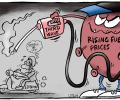
A surge in international oil prices may translate into an increase in the retail selling price of petrol and diesel in India as oil companies face extreme margin squeeze, sources said. Petrol and diesel prices have remained unchanged for 12 days but now the international rate surge is exerting pressure. Current prices of petrol and diesel in the international market are higher by around $4-6 per barrel as compared to average prices during August. However, no increase in retail prices has been affected by oil companies so far, sources said.
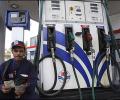
Oil marketing companies on Friday cut petrol price by 32 paise, and diesel by 85 paise a litre with effect from midnight tonight.

The oil companies were making a margin of close to Rs 2 per litre, but considering the impact of rise in gasoline rate and appreciation in rupee, the net available margin may be just around Re 1 per litre.

Oil companies on Monday slashed petrol price by Rs 3.02 per litre.

In Delhi, petrol price down Rs 2.5 a litre, diesel by Rs 2.25

From just 0.2 per cent before the Russia-Ukraine war to now accounting for 35-40 per cent of total crude imports, India's reliance on Russian oil has surged -- drawing fresh scrutiny with US President Donald Trump announcing a penalty on top of a 25 per cent tariff, or tax, on all goods going to the US.
Union Minister Nityanand Rai launched a scathing attack on Congress, stating that the party takes "pleasure" in insulting Bihar and its people.

With consensus on raising petrol, diesel and domestic LPG prices still eluding, the Cabinet Committee on Political Affairs will meet early Wednesday morning. If a consensus is hammered at the CCPA meeting, the Cabinet Committee on Economic Affairs may be convened, government sources said.

Dr Manmohan Singh, the architect of India's economic reforms, had to literally face a trial-by-fire to ensure widespread acceptance of his path-breaking Union Budget of 1991 that saw the nation rise from its darkest financial crises.
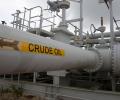
The basket of crude oil that India buys has hit a decade high of $121 per barrel, but retail selling prices of petrol and diesel continue to remain frozen. The Indian basket on June 9 touched $121.28, matching levels seen in February/March 2012, according to data available from the oil ministry's Petroleum Planning and Analysis Cell (PPAC). As per the PPAC, the Indian basket of crude oil averaged $111.86 per barrel between February 25 and March 29 - the immediate period after Russia's invasion of Ukraine sent oil on fire.
Last year witnessed a growth rate of 10.8 per cent against a 13.9 per cent rise in 2009-10.

Petrol and diesel prices on Wednesday were hiked by 80 paise a litre each for the second day in a row since the ending of an over four-and-half month hiatus in rate revision. Petrol in Delhi will now cost Rs 97.01 per litre as against Rs 96.21 previously while diesel rate has gone up from Rs 87.47 per litre to Rs 88.27, according to a price notification of state fuel retailers.
Diesel prices are still under control with subsidies.

Russian oil giant PJSC Rosneft Oil Company is in early talks with Reliance Industries for sale of its 49.13 per cent stake in Nayara Energy, which operates a 20-million tonnes-a-year oil refinery and 6,750 petrol pumps in India, sources said. Reliance has held preliminary talks for acquisition of Nayara, which will help it overtake state-owned Indian Oil Corporation (IOC) to become India's No.1 oil refiner as well as give a meaningful presence in the fuel marketing space.

'Indian refiners can operate without Russian crude from a technical standpoint, but the shift would involve major economic and strategic trade-offs'

Tata Motors on Tuesday said it has reduced prices of its electric vehicle model range by up to Rs 3 lakh. The Mumbai-based automaker said it has reduced the price of Nexon EV by up to Rs 3 lakh, Punch EV by 1.2 lakh, and Tiago EV by Rs 40,000.
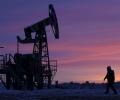
India's annual oil import bill could rise by $9-11 billion if the country is compelled to move away from Russian crude in response to US threats of additional tariffs or penalties on Indian exports, analysts said. India, the world's third-largest oil consumer and importer, has reaped significant benefits by swiftly substituting market-priced oil with discounted Russian crude following Western sanctions on Moscow after its invasion of Ukraine in February 2022.
State-owned oil companies have announced a hike in petrol prices between 37 and 40 paise in the major cities, while diesel will be costlier by 37 to 44 paise with effect from midnight on Friday.
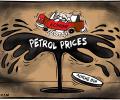
A proposal in the Union Budget 2022-23 to raise excise duty on dirtier, unblended retail petrol and diesel has met with some resistance from the petroleum ministry. However, finance ministry officials say no such communication arguing against the levy of extra duty on diesel has been received from the oil ministry. Until there are discussions between the two departments, the proposal will not be tweaked in the Finance Bill. The Rs 2 per litre additional excise duty proposed on unblended fuels in the Finance Bill will result in a uniform hike of diesel prices across the country from October 1.
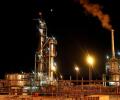
India, the world's third largest oil importing and consuming nation, is likely to save as much as Rs 1.8 lakh crore on import of crude oil and LNG if the trend of softening international energy rates continues, Icra said Wednesday. India, which meets over 85 per cent of its crude oil needs through imports, spent $242.4 billion on buying crude from overseas in the fiscal year ended March 31, 2025.

The prime minister is scheduled to review the financial health of oil PSUs at a meeting with finance minister Pranab Mukherjee and petroleum minister Murli Deora on Wednesday evening.
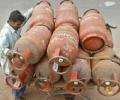
Although the government has started phasing out the subsidy on diesel sale, it continues to supply kerosene and LPG cylinders at subsidised rates.
Not satisfied with the Rs 2 per litre cut in petrol prices, the Bharatiya Janata Party on Friday said it will launch a 'jail-bharo' agitation on June 22 against the Rs 7.50 a litre petrol price hike, saying the ad-hoc policies of the United Progressive Alliance government had played havoc with the nation's energy security.
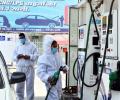
BJP leader Sushil Kumar Modi on Wednesday said it is not possible to bring petrol and diesel under the GST regime for the next eight to 10 years as it would cause an annual revenue loss of Rs 2 lakh crore to all states. Centre and states collectively collect over Rs 5 lakh crore tax on petroleum products, Modi told the Rajya Sabha while participating in a discussion on the Finance Bill 2021. The statement assumes significance in view of the rise in petrol price for the past over one year which even touched Rs 100 per litre in some states. In the first reduction in rates in over a year, petrol price on Wednesday was cut by 18 paise per litre and diesel by 17 paise a litre as international oil prices tumbled to the lowest since early February.
There are places on earth where petrol is cheaper than water.
Petrol price may be cut by as much as Rs 4 a litre from

The Renault Triber's USP remains its exceptional interior space and seven-seater capability, a combination rarely found in the 7 lakh to 10 lakh on-road price bracket in India.
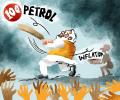
An average Indian spends no more than Rs 1.3 lakh per year, according to official statistics. This is close to what an average Indian earns annually. At this level of per capita income today, one litre of petrol costs one-third of an average Indian's daily income (Delhi prices), making it highly unaffordable. People in most other Asian and emerging countries find it more affordable.

'You've got to understand it is not easy to die by suicide.' 'People commit suicide only when they lose everything and find no other way to live.'
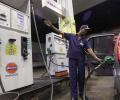
Six non-BJP ruled states -- West Bengal, Tamil Nadu, Andhra Pradesh, Telengana, Kerala and Jharkhand -- have not reduced the VAT on petroleum products, leading to higher prices of petrol and diesel there, Petroleum Minister Hardeep Singh Puri said on Thursday. Puri said in Lok Sabha that the central government has reduced excise duty on petroleum products and some other states, following cues, reduced their Value Added Tax (VAT). Six states -- West Bengal, Tamil Nadu, Andhra Pradesh, Telengana, Kerala and Jharkhand -- have not reduced the VAT, he said amidst vocal protests by the opposition members.

Some of the key names include: Maruti, M&M, Ashok Leyland, Britannia, Ultratech, JK Cement, Havells, Voltas, Amber, Metro, Trent, LemonTree, Indian Hotels, Niva Bupa, HDFC Life, IGL, Acme Solar, Suzlon, Swiggy, Delhivery, ICICI Bank, HDFC Bank, Bajaj Finance, Shriram Finance," according to a report by Motilal Oswal Financial Services.

The Congress took out marches and observed bandh at several places on Saturday to protest against rising fuel prices.
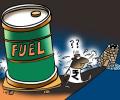
Finance Minister Nirmala Sitharaman on Monday ruled out a cut in excise duty on petrol and diesel to ease prices, which have touched an all-time high, saying payments in lieu of past subsidised fuel pose limitations. Petrol and diesel as well as cooking gas and kerosene were sold at subsidised rates during the previous Congress-led UPA government. Instead of paying for the subsidy to bring parity between the artificially suppressed retail selling price and the cost that had soared because of international rates crossing $100 per barrel, the then government issued oil bonds totalling Rs 1.34 lakh crore to the state-fuel retailers. These oil bonds and the interest thereon are being paid now.

Petrol prices were on Wednesday hiked by Rs 3.07.
Petrol prices may be hiked by Rs 0.65 per litre this week if state-owned oil firms manage to get political approval for the move.

Diesel in Mumbai costs Rs 79.72 per litre at IOC outlets and Rs 79.79 at BPCL outlets.
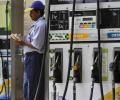
After today's reduction, petrol price has been cut by Rs 12.27 per litre cumulatively since August.
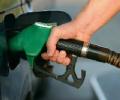
Despite raising petrol prices by around Rs 2.95 a litre - the second-biggest increase in this calendar year so far - public and private retailers are losing Rs 50 crore a day on selling the auto fuel.
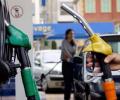
Petrol and diesel prices were on Thursday hiked by 80 paise a litre each, taking the total increase in rates in the last 10 days to Rs 6.40 per litre. Petrol in Delhi will now cost Rs 101.81 per litre as against Rs 101.01 previously while diesel rates have gone up from Rs 92.27 per litre to Rs 93.07, according to a price notification of state fuel retailers.

The price of petrol has been hiked by Rs 1.39 per litre and that of diesel by Rs 1.04 a litre, in sync with firming international rates.
